
The Role of IoT and AI in Enhancing Workplace Safety and Facility Operations
Workplace safety and facility management are essential for businesses, ensuring employee well-being, compliance with regulations and smooth operations. Traditional safety methods often rely on manual monitoring and reactive measures, which can lead to inefficiencies and risks.
The Internet of Things (IoT) and Artificial Intelligence (AI) are transforming how organizations manage workplace safety and facilities. IoT sensors collect real-time data, while AI analyzes this data to detect risks, predict failures and automate responses. This combination helps businesses shift from reactive safety management to proactive prevention.
This blog explores how AI-powered IoT is reshaping workplace safety and facility management, its applications across industries, benefits, challenges and future trends.
1. AI and IoT in Workplace Safety
AI-powered IoT enhances workplace safety by identifying hazards, monitoring worker health and automating emergency responses.
Real-Time Hazard Detection
IoT sensors track workplace conditions, detecting risks like gas leaks, temperature fluctuations and structural weaknesses. AI analyzes this data to identify patterns and predict potential safety threats. In industrial settings, AI can differentiate between normal equipment vibrations and signs of mechanical failure, reducing false alarms and ensuring timely intervention.
Wearable Technology for Worker Safety
Wearable IoT devices embedded with AI improve employee safety by monitoring biometric data, fatigue levels and exposure to hazardous environments. These wearables detect falls, alert supervisors if a worker shows signs of distress and provide early warnings in dangerous conditions. Industries like construction and mining benefit significantly from these real-time safety measures.
AI-Powered Emergency Response Systems
AI-driven emergency response systems analyze real-time data to optimize evacuation routes, prioritize emergency alerts and coordinate rescue efforts. AI-enhanced alarm systems ensure that the most critical threats receive immediate attention, improving crisis management.
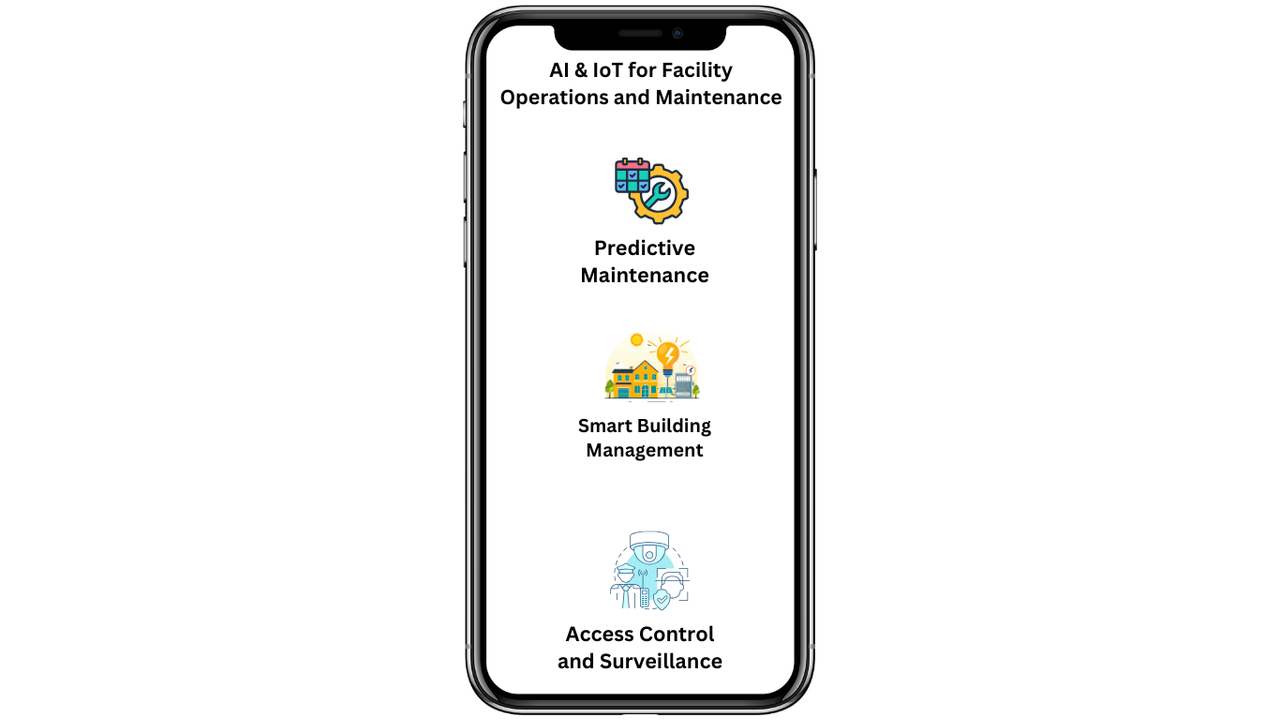
2. AI & IoT for Facility Operations and Maintenance
AI-powered IoT optimizes facility management by improving maintenance, reducing downtime and enhancing security.
Predictive Maintenance
Instead of relying on scheduled inspections, AI analyzes data from IoT sensors to predict equipment failures before they happen. This extends machinery lifespan, reduces downtime and prevents unexpected breakdowns. For example, AI-driven systems in factories monitor machine vibrations and detect wear and tear, allowing timely maintenance without unnecessary interruptions.
Smart Building Management
AI optimizes energy use by adjusting lighting, heating and cooling based on real-time occupancy and environmental conditions. IoT-enabled water sensors detect leaks, reducing waste and costs. AI-driven security systems analyze video feeds to identify potential threats, enhancing workplace security.
Access Control and Surveillance
AI-powered facial recognition and behavior analysis improve security by restricting unauthorized personnel from accessing restricted areas. Surveillance systems equipped with AI detect unusual activities and alert security teams before incidents occur, reducing risks related to workplace theft and security breaches.
3. Industry Applications of AI & IoT in Workplace Safety & Facility Management
AI-powered IoT solutions are widely implemented across various industries -
Manufacturing benefits from predictive maintenance, preventing machinery failures and improving worker safety.
Construction uses wearable IoT devices to monitor fatigue and hazardous conditions on job sites.
Healthcare applies AI and IoT for air quality monitoring, equipment status tracking and patient safety.
Corporate Offices optimize energy consumption, security and facility management with AI-driven automation.
These applications highlight how AI and IoT are transforming safety and operational efficiency across industries.
4. Benefits of AI-Powered IoT in Workplace Safety & Facility Management
AI and IoT provide multiple advantages, including improved safety, reduced operational costs and enhanced efficiency. Predicting hazards before they occur helps businesses minimize workplace injuries and improve productivity. Automated maintenance reduces downtime, while AI-driven security systems strengthen facility protection. Additionally, AI-driven optimization leads to cost savings and sustainability improvements.
5. Challenges and the Future of AI-Enabled IoT in Workplace Safety
Challenges
While AI and IoT bring significant benefits, challenges remain, including cybersecurity risks, high implementation costs and data privacy concerns. Securing IoT networks from cyber threats and balancing employee privacy with AI monitoring are key considerations for businesses adopting these technologies.
Future Trends
As AI and IoT continue to evolve, new advancements will further enhance workplace safety and facility management. AI-powered digital twins will allow businesses to simulate workplace environments and predict risks before they occur. The expansion of 5G networks and edge computing will improve real-time monitoring and response capabilities. Blockchain integration may enhance data security for IoT systems.
AI-powered IoT is revolutionizing workplace safety and facility management by enabling real-time monitoring, predictive maintenance and automated security. Businesses that embrace these technologies gain a competitive edge while ensuring a safer and more efficient work environment. As AI and IoT continue to advance, their impact on intelligent workplace safety and facility operations will only grow stronger.
Would you like to explore case studies or real-world examples of AI-powered IoT in workplace safety?