
How AR and AI Are Transforming Facility Management Training and Maintenance
The integration of artificial intelligence (AI) and robotics is revolutionizing facility maintenance and operations, making them more efficient, cost-effective and safer. Traditional maintenance methods often rely on manual inspections, reactive repairs and routine servicing, leading to inefficiencies, high costs and unexpected failures. However, AI-driven robotics is transforming these processes by enabling predictive maintenance, real-time monitoring and autonomous operations.
From AI-powered inspection drones to robotic cleaning systems and automated security patrols, facility management is becoming more data-driven and intelligent. This article explores how AI and robotics are shaping the future of facility maintenance, their benefits, challenges and emerging trends.
The Need for AI and Robotics in Facility Maintenance
Facility maintenance involves cleaning, inspections, repairs, energy management and security to ensure smooth operations. Large-scale facilities such as airports, hospitals, manufacturing plants and commercial buildings require continuous upkeep, which can be labor-intensive and costly.
With the rise of smart buildings and IoT (Internet of Things) sensors, AI-driven robotics is becoming essential for optimizing facility management. These technologies enable real-time data analysis, automated decision-making and proactive maintenance, reducing downtime and operational expenses.
Key Drivers of AI and Robotics in Facility Maintenance:
✔️ Increasing demand for automation and cost savings
✔️ Need for real-time monitoring and predictive maintenance
✔️ Enhancing safety in hazardous tasks
✔️ Reducing energy consumption and waste
✔️ Growing adoption of IoT and AI-powered analytics
AI and Robotics Applications in Facility Maintenance
1. AI-Driven Predictive Maintenance
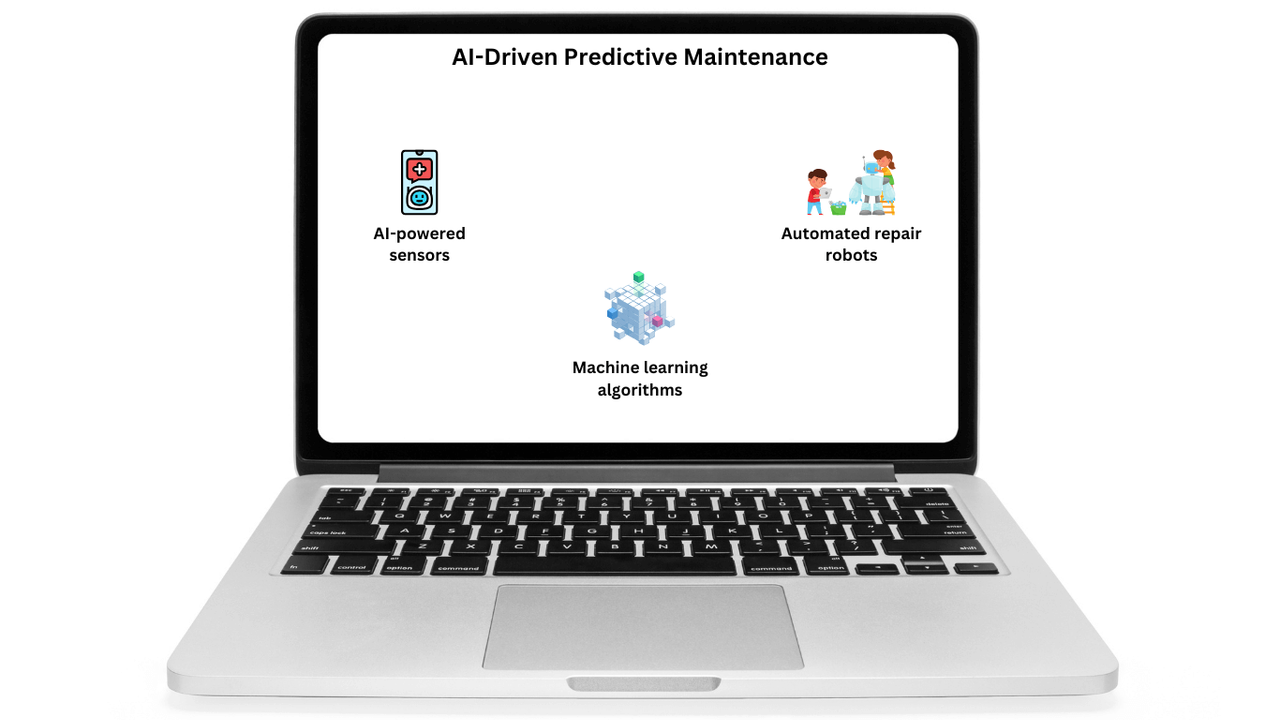
Traditional maintenance follows a reactive or preventive approach, leading to unexpected breakdowns or unnecessary servicing. AI enables predictive maintenance, allowing robots to analyze equipment data and detect potential failures before they happen.
🔹 AI-powered sensors monitor machinery conditions, including temperature, vibration and pressure.
🔹 Machine learning algorithms analyze historical data to predict when a system needs maintenance.
🔹 Automated repair robots perform minor fixes, reducing downtime.
For example, AI-driven HVAC monitoring can detect irregularities in air conditioning systems and optimize performance, reducing energy costs.
2. Autonomous Cleaning and Sanitation
AI-powered robots are revolutionizing cleaning and sanitation in large facilities. These systems operate autonomously, ensuring consistent and high-quality cleaning.
🔹 AI-driven floor cleaners adjust cleaning routes based on real-time foot traffic data.
🔹 UV disinfection robots eliminate bacteria and viruses in hospitals and office spaces.
🔹 Automated window-cleaning robots handle high-rise buildings, improving safety.
With AI, these robots learn and optimize their cleaning patterns, reducing water, electricity and detergent usage.
3. AI-Enabled Security and Surveillance Robots
Security robots equipped with AI are enhancing facility safety by monitoring premises, detecting threats and responding to incidents.
🔹 Facial recognition AI identifies authorized personnel and potential intruders.
🔹 Autonomous security robots patrol facilities using thermal imaging and motion detection.
🔹 AI-powered drones conduct aerial surveillance in warehouses, industrial sites and campuses.
By analyzing video feeds and sensor data, AI helps prevent security breaches and optimize emergency response.
4. AI-Powered Inventory and Asset Management
Facility managers rely on accurate inventory tracking and asset monitoring for efficient operations. AI and robotics automate these processes, reducing manual labor and errors.
🔹 RFID-enabled AI robots scan and update inventory records in real-time.
🔹 Autonomous drones monitor stock levels in large warehouses.
🔹 AI-powered sorting robots optimize warehouse logistics.
AI-powered inventory management ensures optimal stock levels, reduces losses and improves productivity.
5. Smart HVAC and Energy Management
AI is playing a crucial role in optimizing energy consumption and reducing waste in facility operations.
🔹 AI-driven HVAC robots adjust temperature, humidity and airflow for energy efficiency.
🔹 IoT sensors collect real-time data on building energy usage.
🔹 AI algorithms analyze patterns to predict energy demand and minimize costs.
For example, AI can automatically adjust lighting and climate controls based on occupancy levels, reducing electricity bills.
Benefits of AI and Robotics in Facility Maintenance
✔️ Increased Efficiency – AI-powered robots operate 24/7 without breaks, completing tasks faster and more accurately than humans.
✔️ Cost Reduction – Automated maintenance reduces labor costs, prevents expensive breakdowns and optimizes energy consumption.
✔️ Improved Safety – Robots handle hazardous tasks such as chemical cleaning, fire suppression and working in confined spaces, reducing human risk.
✔️ Predictive Maintenance – AI-driven analytics prevent failures before they occur, minimizing downtime.
✔️ Sustainability – AI optimizes energy usage, reducing carbon footprints and operational waste.
Challenges of AI and Robotics in Facility Management
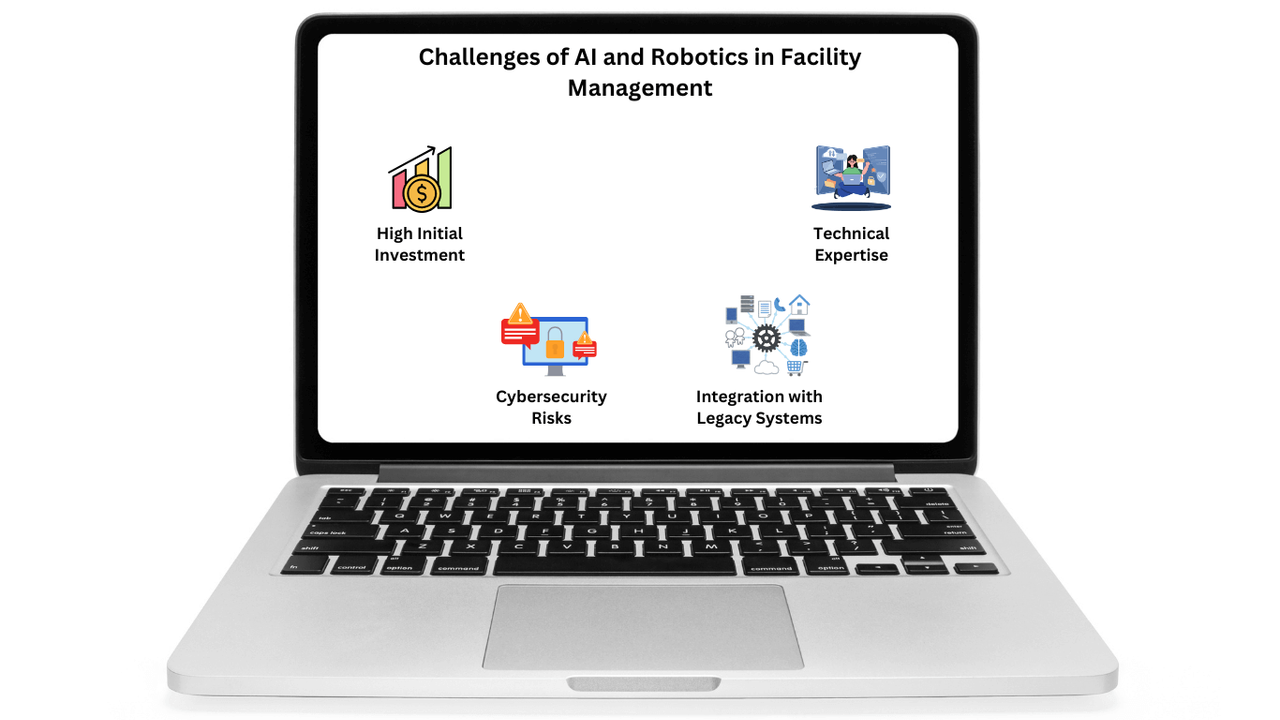
🚧 High Initial Investment – Deploying AI-powered robotics requires significant upfront costs for hardware, software and infrastructure upgrades.
🚧 Integration with Legacy Systems – Many older facilities struggle to integrate AI and robotics with existing building management systems (BMS).
🚧 Technical Expertise – AI-driven robots require skilled personnel for maintenance, programming and troubleshooting.
🚧 Cybersecurity Risks – AI-enabled robots connected to IoT networks can be vulnerable to hacking and data breaches, requiring robust security measures.
Overcoming these challenges requires strategic planning, training and collaboration with technology providers.
Future of AI and Robotics in Facility Maintenance
As AI and robotics continue to advance, facility maintenance is evolving towards fully autonomous management systems. Emerging trends include: