
On this page
Leveraging AI for Energy-Efficient Facility Management in Smart Cities
As urbanization accelerates, cities worldwide face mounting challenges in managing energy resources efficiently. The increasing demand for energy in commercial and residential buildings, transportation networks and public infrastructure has placed immense pressure on facility management systems to adopt smarter, more sustainable solutions. Artificial Intelligence (AI) has emerged as a key driver in optimizing energy use, reducing operational costs and improving efficiency across smart cities.
AI-powered energy management solutions enable real-time monitoring, predictive analytics and automation, allowing facility managers to optimize energy consumption, reduce waste and enhance sustainability. From smart buildings and automated HVAC systems to AI-driven predictive maintenance and IoT-enabled energy monitoring, AI is transforming how cities manage their energy resources.
This blog explores how AI is revolutionizing energy-efficient facility management in smart cities, examining its applications, benefits, challenges and the future of AI in urban energy management.
The Role of AI in Smart Cities
What Defines a Smart City?
A smart city leverages digital technologies such as the Internet of Things (IoT), big data and AI to optimize urban infrastructure, improve public services and enhance overall quality of life. A significant focus of smart cities is energy efficiency, given that urban areas are responsible for over 75% of global energy consumption and contribute to nearly 70% of greenhouse gas emissions.
By integrating AI-powered systems, cities can create self-regulating energy ecosystems that adapt to demand fluctuations, optimize power distribution and minimize waste. AI enhances energy efficiency in key areas such as -
Smart buildings - AI-driven building management systems (BMS) regulate energy use based on occupancy patterns and environmental factors.
Public utilities and infrastructure - AI optimizes street lighting, water distribution and waste management to reduce resource consumption.
Transportation networks - AI-powered traffic control and public transport systems reduce fuel consumption and enhance mobility efficiency.
With AI, smart cities can reduce their energy footprint, lower operational costs and improve infrastructure resilience while advancing toward sustainability goals and carbon neutrality.
AI-Powered Energy Management in Facility Management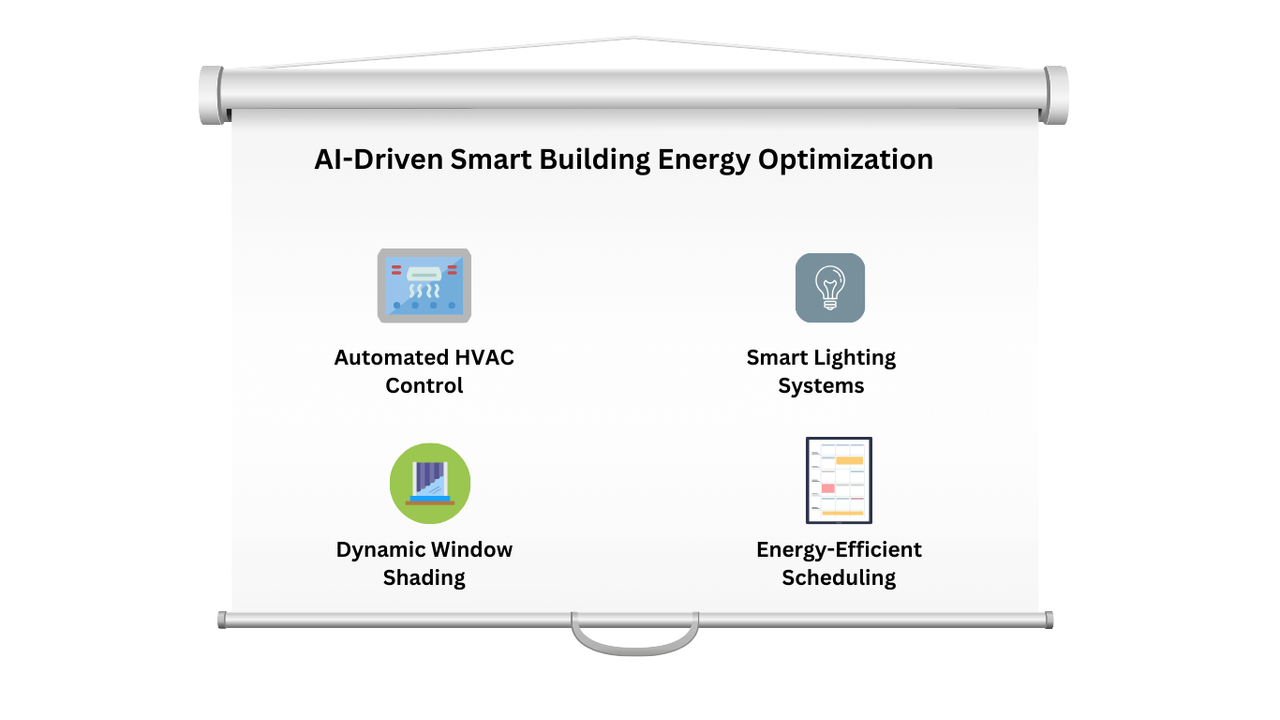
1. AI-Driven Smart Building Energy Optimization
Buildings contribute to nearly 40% of total energy consumption globally, making them a primary focus for AI-driven energy management solutions. Building Energy Management Systems (BEMS) leverage AI algorithms to analyze data from IoT sensors, weather forecasts, occupancy levels and energy usage patterns to optimize power consumption in real time.
Key AI-Enabled Smart Building Features
Automated HVAC Control - AI dynamically adjusts heating, ventilation and air conditioning (HVAC) settings based on real-time occupancy, temperature forecasts and humidity levels, reducing energy waste.
Smart Lighting Systems - AI-integrated lighting controls adjust brightness and power usage based on daylight levels and room occupancy.
Energy-Efficient Scheduling - AI schedules energy-intensive tasks (such as cooling, heating and machinery operation) during off-peak hours to minimize demand on the power grid.
Dynamic Window Shading - AI optimizes natural light usage by adjusting window shades, reducing reliance on artificial lighting and HVAC systems.
AI-driven BEMS have already demonstrated significant energy savings, with reports indicating reductions of 20-30% in total building energy consumption.
2. Predictive Maintenance for Energy Efficiency
Traditional facility maintenance strategies are either reactive (fixing issues after failure) or preventive (routine inspections and scheduled maintenance). Both approaches can lead to unnecessary energy consumption, higher operational costs and unplanned downtime. AI introduces predictive maintenance, which uses machine learning to detect early signs of equipment failure and inefficiencies before they escalate.
How Predictive Maintenance Optimizes Energy Use
AI-Based Fault Detection - Machine learning models analyze real-time performance data from HVAC systems, elevators, power grids and machinery to identify inefficiencies before they cause significant energy waste.
Automated Alerts & Maintenance Scheduling - AI predicts when and where maintenance is required, reducing unnecessary inspections and preventing sudden equipment failures.
Reduced Downtime & Energy Waste - By detecting overheating, abnormal power consumption and mechanical wear, AI ensures equipment operates at peak efficiency, minimizing energy losses.
A study by McKinsey & Company found that AI-driven predictive maintenance can reduce unplanned downtime by 30-50% and lower maintenance costs by 10-40% while significantly improving energy efficiency.
3. AI-Powered Energy Demand Forecasting
Accurate energy demand forecasting is crucial for optimizing power distribution and minimizing waste. AI-driven energy forecasting enables facility managers to predict energy demand fluctuations based on historical patterns, weather data and real-time occupancy trends.
Key Benefits of AI in Energy Forecasting
Load Balancing - AI ensures that energy is distributed efficiently, preventing overloads and reducing reliance on backup generators.
Renewable Energy Integration - AI predicts solar and wind power availability based on weather forecasts, optimizing renewable energy use.
Automated Power Grid Adjustments - AI dynamically adjusts power allocation based on real-time demand, reducing energy waste and improving grid stability.
4. IoT-Enabled Smart Sensors for Real-Time Energy Monitoring
The integration of AI with IoT has enabled real-time energy monitoring across smart city infrastructures. IoT sensors collect data on energy usage, environmental conditions and equipment performance, which AI algorithms analyze to identify optimization opportunities.
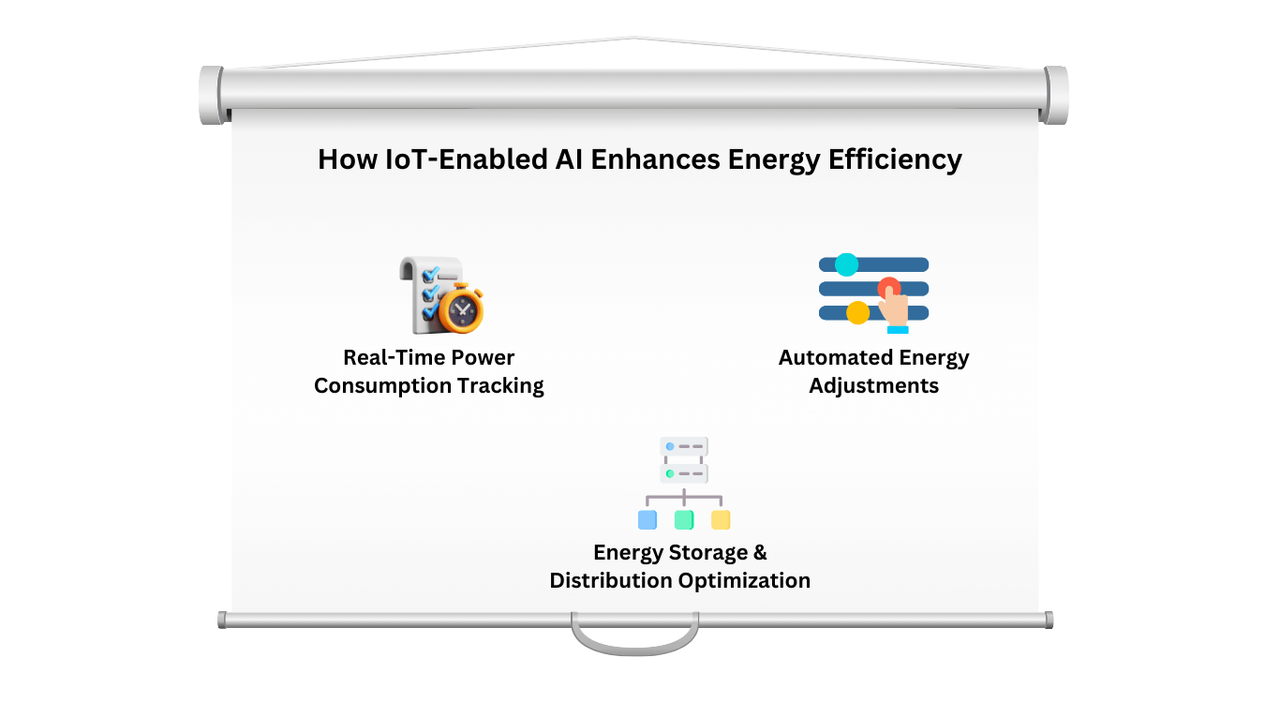
How IoT-Enabled AI Enhances Energy Efficiency
Real-Time Power Consumption Tracking - AI detects abnormal energy spikes and inefficiencies, allowing facility managers to take corrective action immediately.
Automated Energy Adjustments - AI automates lighting, HVAC and appliance control, ensuring minimum energy waste.
Energy Storage & Distribution Optimization - AI enhances the efficiency of energy storage systems, reducing reliance on non-renewable sources during peak demand.
Case Studies - AI in Action for Energy Efficiency
1. AI-Driven Smart Grids in Barcelona
Barcelona has implemented AI-powered smart grids that dynamically optimize energy distribution, reducing power outages, balancing electricity loads and maximizing renewable energy usage. These AI systems analyze real-time energy demand and weather conditions to allocate power efficiently.
2. Singapore’s AI-Optimized Smart Buildings
Singapore’s government has integrated AI-powered Building Energy Optimization Systems (BEOS), leading to a 30% reduction in energy consumption across commercial and residential properties. These AI-driven systems monitor occupancy trends, adjust lighting and HVAC settings and optimize renewable energy usage.
3. Google’s DeepMind AI for Data Center Energy Efficiency
Google has applied DeepMind’s AI to its data centers, reducing cooling energy consumption by 40%. AI continuously monitors temperature, humidity and server workload, optimizing cooling systems in real time.
Challenges of AI Implementation in Energy Management
1. High Initial Investment
AI adoption requires significant upfront costs for sensor deployment, infrastructure upgrades and AI system integration.
2. Data Privacy & Cybersecurity Risks
AI-powered facility management relies on large volumes of sensitive data, making it vulnerable to cyber threats and data breaches.
3. Infrastructure Compatibility Issues
Many urban facilities still operate on legacy energy management systems that may not be AI-compatible, requiring costly upgrades.
4. Workforce Skill Gaps
Successful AI implementation requires expertise in AI, IoT and data science, highlighting the need for upskilling facility managers and technicians.
The Future of AI in Energy-Efficient Smart Cities
1. AI-Driven Decentralized Energy Networks
Future AI-powered microgrids will enable localized energy generation and distribution, reducing dependence on centralized power plants.
2. AI-Powered Carbon Emission Tracking
AI will enhance